
In this post I discuss the concept of ‘quiet accessibilising’, what it means and how organisations can use it to move from individual action into supported and sustainable change.
For me, ‘quiet accessibilising’ started with frustration. Several years ago when I was working in higher education, I was becoming increasingly aware of the barriers that could prevent people with disabilities and access needs from participating fully in digital learning. I was also spending more and more time learning what I could do to remove those barriers.
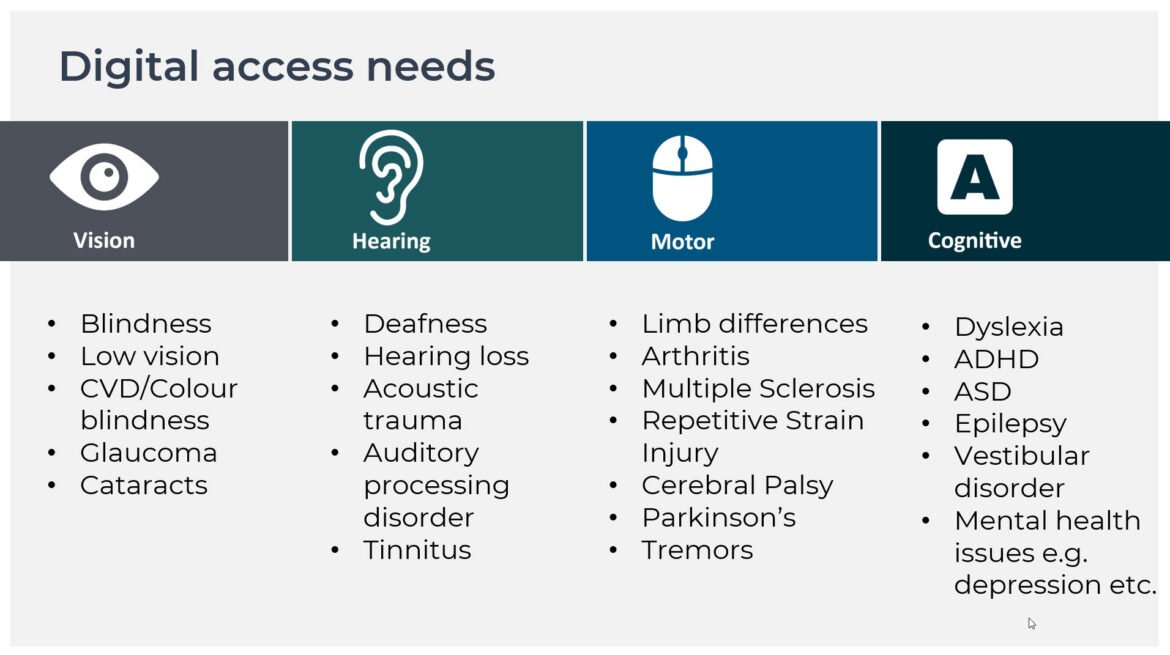
What made accessibility feel so fundamentally important to me was the scale of the potential exclusion. Research from Boston Consulting Group found that around 25% of employees surveyed across 16 countries said they had a disability or health condition that limited a major life activity. As an instructional designer, I didn’t feel I was doing my job properly if the learning I created could exclude anyone, let alone a potential quarter of my audience!
But I also found my situation incredibly frustrating because the strategic organisational support to make accessibility happen consistently simply wasn’t there. So I carried on doing what I could. The more I learnt and applied, the more convinced I became that accessibility was fundamentally the right thing to do. I could also clearly see that it led to better learning experiences for everyone.
That frustration, and the feeling of having to find my own way forward, eventually became part of the reason I left my role and started eLaHub. Then, as our training and advocacy work grew, I started recognising the same experience again and again in other learning practitioners.
I wasn’t the only one
Practitioners on our training would tell us that they understood why accessibility mattered and wanted to make their learning more accessible, but the wider organisational support simply was not there. Most had no formal accessibility strategy to work within, and many others were using templates, tools or development processes that had never properly considered accessibility.
Yet many of them were still doing something. They were adding alternative text when nobody had specifically asked them to, questioning inaccessible interactions, improving captions, checking colour contrast or finding out how to make content work with a keyboard. Sometimes they were learning how to do all of this in their own time. The more people I spoke to through our training and advocacy work, the more I realised there was a recognisable pattern.
Eventually, I gave it a name – ‘quiet accessibilising’.
Why I called it ‘quiet accessibilising’
The phrase was inspired by ‘quiet quitting’, a term that became widespread during the Covid pandemic. Quiet quitting described people rejecting the expectation that they should constantly go above and beyond their job requirements, often as part of a wider reassessment of work, wellbeing and boundaries.
When I first wrote about quiet accessibilising, I referenced that idea but what I was seeing around accessibility was in fact the exact opposite. Learning practitioners were often choosing to go beyond what their organisation required of them, because they had recognised that the content they were creating could exclude people and felt strongly enough to take action themselves.
I called this ‘quiet accessibilising.’
I first shared the idea publicly in my LinkedIn post, Making a difference through ‘quiet accessibilising’, where I described it as:
Harnessing the positivity and purpose that you get from doing the right thing and making a difference, and taking action yourself to make digital content as accessible and inclusive as possible, even if others don’t agree with you.
I then explored the idea further in my presentation, How ‘Quiet Accessibilising’ is disrupting a ‘Diversish’ industry, at IDTX, the Instructional Design Tips Exchange conference. The session is available as an IDTX24 recording on YouTube, and the fantastic response to both the post and the session showed me just how widely the idea resonated with learning practitioners.
Quiet accessibilising so often begins with one person deciding that excluding learners is no longer acceptable. Those individual actions are incredibly important, but as our work with organisations at eLaHub developed, we began to see more clearly why quiet accessibilising can only take accessibility so far.
The limits of quiet accessibilising
Our consultancy work has been particularly important in showing us where those limits lie. A learning designer may have developed excellent accessibility knowledge, but they are still working within the systems, processes and priorities their organisation gives them.
If the templates practitioners are using contain inaccessible components, they have to work around them. If accessibility is absent from the project brief, other priorities can take over before development has even begun.
The same problem can appear further along the process. If a supplier has never been given accessibility requirements or testing happens only when development is complete, barriers may emerge at a point when fixing them requires significant additional work.
The practitioner may have developed the knowledge and commitment, but the system surrounding them has to develop too. The next stage of quiet accessibilising is about taking what individual practitioners have learnt and building it into the way an organisation works.
From advocacy to architecture
This brings me to an idea that has become increasingly important in our thinking at eLaHub. In September 2025, accessibility leader William Harkness published an article containing the heading ‘From Advocacy to Architecture’, which immediately resonated with me.
William’s argument was that advocacy creates visibility and helps change attitudes, but lasting progress also requires accountability to be built into organisational systems and processes. That describes exactly the transition I think Learning and Development needs to make.
Advocacy has been central to eLaHub since we began. Through our advocacy work, we have spent years raising awareness, sharing practical experience and helping people understand why accessible learning matters.
Quiet accessibilisers are advocates too, even when their advocacy happens through the everyday decisions they make about the content in front of them. But awareness and commitment need support to progress.
Advocacy builds awareness. Architecture turns that awareness into the way learning is designed, developed, procured and tested.
Putting accessibility architecture into practice
Architecture in this context is much wider than technical infrastructure. It means looking at the organisational environment surrounding the creation of learning and identifying where accessibility can become part of normal processes rather than relying on individuals to introduce it themselves.
Accessibility requirements can be included in project briefs before design starts, and storyboards can contain accessibility prompts and guidance. Teams can use approved accessible templates and components rather than asking every designer to solve the same accessibility challenges independently.
Supplier requirements can also make expectations clear before work is commissioned, while testing can take place at appropriate points throughout development. Clear responsibilities can establish what happens when accessibility issues are identified and who needs to be involved in resolving them.
Practitioners also need access to the knowledge, tools, time and specialist support required to put these processes into practice. These are the kinds of areas we increasingly explore through our consultancy projects with organisations that want accessibility to become part of normal learning practice rather than something addressed project by project.
This is where advocacy begins to become architecture.
Shift accessibility left
Moving from advocacy to architecture fits closely with another principle that has become central to our work at eLahub: shifting left on accessibility. Too many accessibility problems are still discovered when a course has already been designed, interactions have been developed, multimedia has been produced and deadlines are approaching.
At that point, remediation can be difficult and expensive. Shifting left means making accessible decisions earlier in the learning development lifecycle, when requirements are agreed, content is storyboarded and interactions are selected.
It also means giving practitioners practical accessibility knowledge before they start creating content. Knowing that accessibility matters provides the motivation, while knowing how to apply it enables people to make better decisions as they work.
Finding an accessibility barrier during an audit is valuable because it gives us the opportunity to correct it. We give a great example in our post Design accessible eLearning interactions for better learning.
Preventing the same barrier from being created in the first place can have an even greater impact. Our eLaHub ultimate guide to shifting left on accessibility for L&D teams explores how organisations can build accessibility into the learning development process much earlier.
Creating the resources
My own experience of quiet accessibilising also shaped the resources I went on to create. I first developed the eLa Framework because I needed a practical way to interpret accessibility standards in the context of digital learning and understand what I should actually be doing differently as an instructional designer.
That framework became the foundation for my book Designing Accessible Learning Content, which brought the standards together into a reference guide specifically for learning practitioners. But as my own knowledge and our work at eLaHub developed, I could see that practitioners needed more than a reference guide. They needed much more hands-on support to apply accessibility in practice, make decisions about real learning content and build that knowledge into their everyday work.
That led to the Designing Accessible Learning Content Programme. For quiet accessibilisers, it provides the practical tools, guidance and support to help them take action within the learning they create. For organisations wanting to take accessibility further, it also explores accessibility maturity, strategy and implementation, helping connect the capability of individual practitioners with the wider organisational change needed to make accessible learning the default.
Five ways to move from quiet accessibilisers to strategic architecture
Quiet accessibilisers can be an incredibly valuable starting point for organisational change because they have already begun identifying barriers, finding solutions and building accessibility knowledge through their own practice. The opportunity for organisations is to recognise that work and use it to help shape something much more systematic.
- Find your quiet accessibilisers
Start by finding out who is already trying to make learning more accessible. They may be questioning inaccessible interactions, learning how to test with assistive technology, improving multimedia or quietly adapting the way they design and develop content.
- Ask what is getting in their way
Quiet accessibilisers often have first-hand experience of the places where organisational systems make accessibility harder. Ask them about the templates, tools, processes, supplier relationships or project expectations that repeatedly create barriers, and use that insight to identify where change is needed.
- Value their expertise without making accessibility their responsibility
Accessibility champions can make an enormous contribution, particularly when they have built knowledge through experience and personal commitment. But that expertise should help develop wider capability across the organisation rather than leaving one or two people responsible for identifying and fixing everybody else’s accessibility problems.
- Capture and share what works
When someone finds a more accessible way to create an interaction, structure content or solve a recurring problem, capture what they have learnt. An individual solution can become team guidance, an approved component or a better starting point for future projects.
- Turn recurring solutions into architecture
Look beyond each individual accessibility issue and ask what could change in the surrounding system to prevent it appearing again. Recurring problems can lead to changes in project briefs, templates, procurement requirements, supplier expectations or testing processes, turning the experience of individual practitioners into strategic architecture.
How do we prevent this barrier appearing again?
From quiet action to lasting change
One of the things I have loved about giving quiet accessibilising a name is seeing the idea travel further. In January 2025, learning designer Kayleen Holt published Quiet Inclusion: What L&D Can Do When DEI Is Under Fire, crediting quiet accessibilising as the inspiration for her thinking. Her article takes the idea into a wider context, exploring what practitioners can continue to influence through their own work when organisational support for inclusion may feel less certain.
I still have the same unshakeable belief I had when I first described quiet accessibilising: accessible and inclusive digital learning can become the default across Learning and Development. Quiet accessibilisers are helping us move towards that, but I would also like fewer practitioners to need to do this work quietly, and more organisations to turn their knowledge, commitment and practical experience into systems that support accessible learning consistently.
Quiet accessibilising can start the change. Moving from advocacy to architecture is how we help it last.
About this article
Written by: Susi Miller and the eLaHub team
Published: August 2026
Explore more with the eLaHub newsletter
For longer thought-leadership articles, in-depth practical guidance and strategic perspectives on accessible and inclusive learning, subscribe to our LinkedIn newsletter, The eLaHub Accessibility Briefing.
Each edition explores an important topic in greater depth, drawing on research, client experience and lived experience. You will find clear guidance, practical reflections and useful ideas to help you move accessibility forward across your organisation.
Subscribe to The eLaHub Accessibility Briefing [Add link]
Links and resources
- Boston Consulting Group – People Strategy: Including Workers with Disabilities
- Making a difference through ‘quiet accessibilising’ – Susi Miller, LinkedIn
- How ‘Quiet Accessibilising’ is disrupting a ‘Diversish’ industry – Susi Miller, IDTX24 recording
- Quiet Inclusion: What L&D Can Do When DEI Is Under Fire – Kayleen Holt
- Section 503: From Political Theater to Systemic Accountability – William Harkness
- How accessibility testing can lead to better learning for everyone – eLaHub Insights
- eLaHub ultimate guide: Shifting left
- Designing Accessible Learning Content Programme